São Vicente
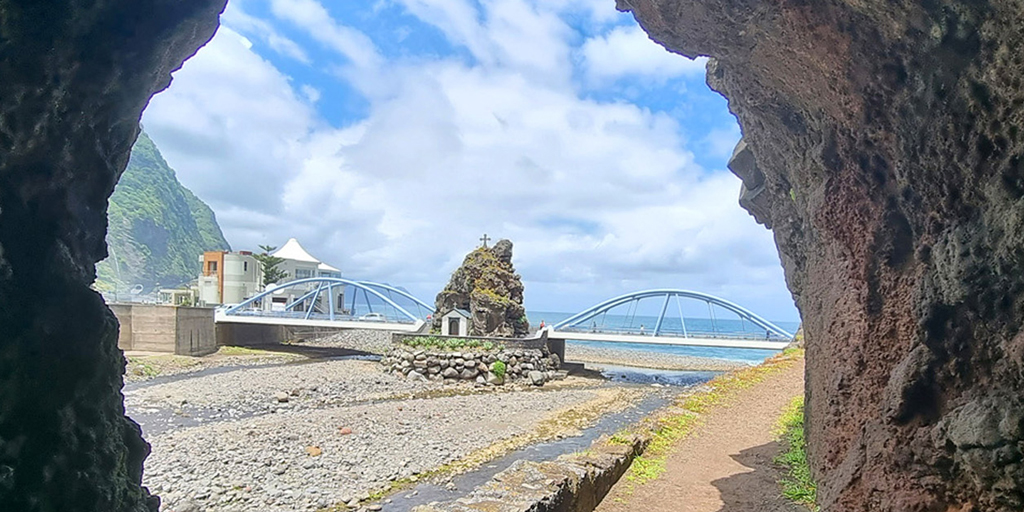
São Vicente – the Valley of St. Vicent The Place and its History São Vicente has a long history that is closely linked to the island’s natural and geological features. The village was founded shortly after the discovery of Madeira in the 15th century; the fertile soil and proximity to the sea made the village an important center for agriculture and trade. Sugar cane played a central role in the early days, later São Vicente was known for its wines. The Igreja de São Vicente, built in the 17th century, is one of the oldest buildings in the village. Over the centuries, São Vicente developed into a popular destination for travelers who wanted to enjoy the tranquillity of the north coast and the beauty of the landscape. The village’s favorable location at the mouth of the Ribeira de São Vicente, surrounded by impressive mountains with green slopes, still contributes to its appeal today. Right by the Sea: the Chapel of St. Vincent The chapel of São Vicente is located in the estuary of the river “Ribeira de São Vicente” and was built at the end of the 17th century (around 1694) in a single basalt block. According to tradition, the martyr St. Vincent is said to have appeared here to the astonished inhabitants of São Vicente. The Lava Caves and the Volcanism Center Unfortunately, this entire complex is currently closed to visitors due to renovation work. This is a great pity, as the Grutas de São Vicente, the local lava caves, are a fascinating testimony to Madeira’s volcanic past. Around 890,000 years ago, a volcanic eruption formed the tubes that are now accessible as caves. They are part of an underground network consisting of lava tunnels left behind by cooled lava. Visitors can learn more about the formation of Madeira here. The Volcanism Center, located right next to the caves, offers interactive exhibitions about the island’s geological processes.The caves and the information center are due to reopen in 2025. Rota da Cal – An Insight into Lime Processing The Rota da Cal, the “lime path”, is a lesser-known place in São Vicente. This historic route leads to the old lime kilns that were once used to process limestone. Lime was an important raw material for construction and agriculture. The route offers a mixture of history and nature, as it leads through idyllic landscapes with magnificent views of the mountains and the sea. For me, it is a relaxing and mystical place. Looking for more stress-free adventures on Madeira? “Madeira by Bus” is your ultimate travel companion, featuring detailed bus schedules, insider tips, and must-visit destinations across the island. Whether you’re a first-time visitor or a seasoned explorer, this guide makes it easy to plan your journey.👉 Get your copy today at www.madeira-by-bus.com/read and start exploring Madeira the eco-friendly way!
Seixal
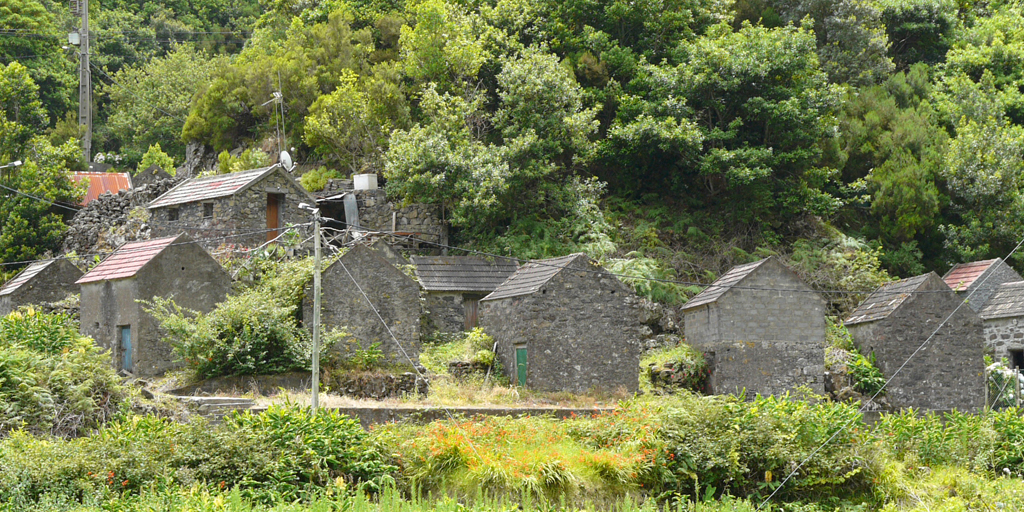
Seixal – and the Chão da Ribeira High Valley The Chão da Ribeira above Seixal is a high valley with a fascinating mix of nature and cultural history. Historically, this valley was used intensively by the local population for agriculture and livestock farming. Traditional haystacks, which were built in the early days of settlement and today – together with countless agricultural terraces – characterize the landscape, are visible evidence of the farming activities. On the pastures are the “Palheiros”, small huts where tools, fodder and other materials were stored. Today, some of them have been renovated and serve as weekend cottages or for traditional celebrations and gatherings. A largely unknown tradition was the use of cable systems (“fio”) to transport wood and shrubs from the higher forests of Fanal down to the valley. These raw materials were used as fuel, among other things. The leaves were also a welcome resource and were used as fertilizer. The municipality of Seixal has a long wine-growing tradition. In addition to wine production, spirits were also made from wine yeast. In the past, however, the sale of these spirits was prohibited or restricted. Therefore, these products were smuggled up to Paúl da Serra and further south via steeply ascending paths. Festa do Panelo Today, Chão da Ribeira in Seixal has a small, cozy picnic area with a barbecue, tables and benches. This is also where the “Festa do Panelo” takes place in January, where a traditional stew of vegetables and sausages is prepared and enjoyed. The origin: after Christmas, the young people of Seixal would collect some salted pork from each household and cabbage and potatoes from the fields of Chão da Ribeira.Everything was then prepared as a stew and served on the floor over cabbage and bay leaves. This is how the idea of “Panelo” was born and it is still the case today that participants bring their own ingredients (and of course plates and cutlery). Laurisilva and Levada The Chão da Ribeira forest area is part of the Laurisilva (laurel forest) and is also the starting point for some hiking trails and more challenging activities such as canyoning. Almost at the end of the ever-narrowing valley is a trout farm, which is fed with water from the Levada do Chão da Ribeira. The Levada do Chão da Ribeira is divided into two main branches: The branch on the right bank of the Ribeira do Seixal follows the Caminho do Chão da Ribeira and the branch on the left bank flows towards Seixal via the Vereda do Moinho. At the end of the two canals is an ancient “water distribution box” carved in stone. Looking for more stress-free adventures on Madeira? “Madeira by Bus” is your ultimate travel companion, featuring detailed bus schedules, insider tips, and must-visit destinations across the island. Whether you’re a first-time visitor or a seasoned explorer, this guide makes it easy to plan your journey.👉 Get your copy today at www.madeira-by-bus.com/read and start exploring Madeira the eco-friendly way!
São Jorge
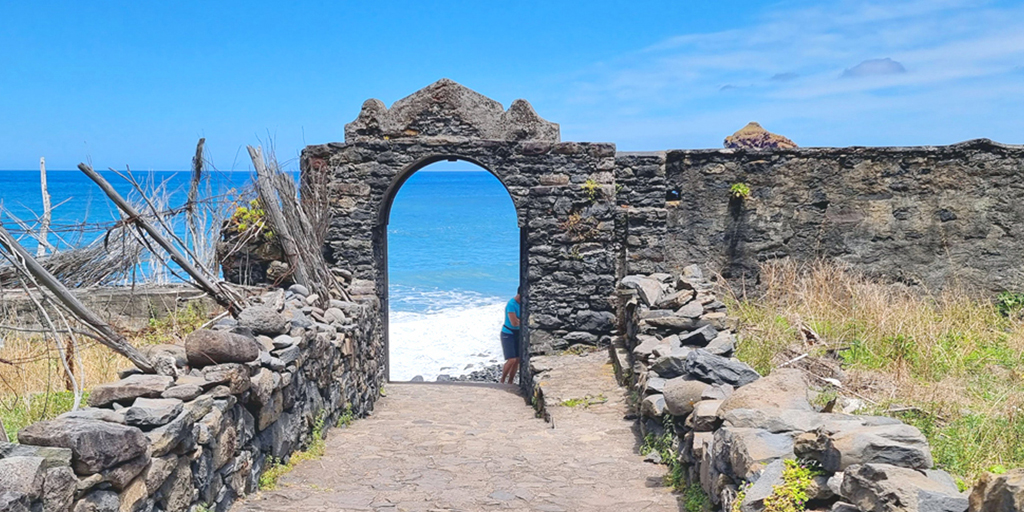
São Jorge – In the North of Madeira São Jorge, located on Madeira’s northern coast, is one of the island’s oldest parishes and belongs to the municipality of Santana. Founded in 1515, São Jorge celebrated its 507th anniversary in 2022. In addition to hosting one of Europe’s oldest water-powered sawmills in the higher-lying area of Achadinha, São Jorge is also home to the well-known coastal area of Calhau. Here, you will find the historic and internationally recognized Ruínas de São Jorge. The Ruins and Beach in São Jorge The most striking architectural feature of the Ruínas is the arched gateway. This served as the entrance to a sugar mill built here during the early settlement of the island. In some historical records, the gateway is also described as the entrance to the former fortress (Redoute) of São Jorge.https://www.cm-santana.com/visitar/o-que-fazer/patrimonio-e-cultura Today, the ruins are a stunning photo spot, particularly due to their dramatic location overlooking the Atlantic Ocean. The Caminho Real 23, a historic trail connecting northern coastal towns, also passes through this site (marked on the Calhau Bridge). So this is a significant point for hiking enthusiasts. The Water-Powered Mill and Sawmill in Achadinha Further inland, São Jorge boasts two technical marvels that remain operational, offering a glimpse into the enduring craftsmanship of its residents.Both landmarks can be visited after hiking along the Levada do Rei trail.https://www.cm-santana.com/visitar/o-que-fazer/patrimonio-e-cultura The Water-Powered Mill Built in the 18th century using local basalt stone, the mill in Achadinha served as a central hub for nearby villages to process grain. Powered by water from the levadas, it ground wheat, corn, and barley into flour for the region’s staple foods.Today, the mill occasionally operates for demonstrations, offering visitors a fascinating look into Madeira’s agricultural history. The Water-Powered Sawmill Just a short walk from the mill is the water-powered sawmill, one of the oldest of its kind in Europe. Driven by powerful water wheels, the saws cut precise planks for constructing houses, boats, and furniture. The sawmill’s combination of functionality and sustainability made it a vital part of the local economy. Today, it stands as an impressive testament to the engineering ingenuity of the past. A Bridge Between Past and Present The water-powered installations in Achadinha exemplify how Madeirans ingeniously adapted their environment to the challenges of island life. They represent an era when sustainability wasn’t a trend but a necessity. For visitors, the mill and sawmill are not only fascinating landmarks. They are also an invitation to delve into Madeira’s rich history. Looking for more stress-free adventures on Madeira? “Madeira by Bus” is your ultimate travel companion, featuring detailed bus schedules, insider tips, and must-visit destinations across the island. Whether you’re a first-time visitor or a seasoned explorer, this guide makes it easy to plan your journey.👉 Get your copy today at www.madeira-by-bus.com/read and start exploring Madeira the eco-friendly way!